
Mining for rare earth elements
at the headwaters of the Bitterroot River
Two foreign-based mining companies, US Critical Materials (USCM) and Integral Metals, own mining claims in several different headwater drainages feeding the Bitterroot River, including Sheep Creek, upper West Fork, Johnson Creek, and Woods Creek. Both companies have publicized their intention to mine for Rare Earth Elements (REEs) as soon as possible.
Mining has a centuries-long history of profiteering while destroying the environment by polluting air, water, and soil before declaring bankruptcy and leaving taxpayers to clean up the mess.
Despite assertions that “this time will be different,” a refrain mining companies always use, no proof is offered to substantiate that declaration. Not a single example exists that mining is not in some way harmful to the environment. Therefore, it is not an exaggeration to claim that we, the residents of the Bitterroot Valley, are fighting for our livelihoods.
If exploration and mining proceed, water flowing into the Bitterroot River could be polluted by toxins released from bedrock, including radioactive thorium, lead, and selenium. Drilling chemicals and fuel spills could also pollute ground water, soil, and streams. If processing happens near the mining sites, ammonium leaching agents, would enter soil and possibly flow into streams feeding the Bitterroot River. New roads, drill pads, and mine workings may dump sediment into streams, harming trout.
The Bitterroot River supplies much of the Valley’s water. Contamination of that water would be damaging for the Bitterroot Valley’s residents and ranchers. We can’t let that happen.
The storage and eventual transport of ore and tailings would degrade air quality. The possible presence of asbestos at the proposed mining sites could turn the Bitterroot Valley into another Libby, Montana. We can’t let that happen.
National mining regulations are almost nonexistent. So, the best recourse against these foreign-based mining companies is adequate public pressure on elected officials at every level of government so they do what is necessary to protect our most precious natural resources, water and air.
For example, the Forest Service and Montana’s Department of Environmental Quality (DEQ) must be compelled to require rigorous, measurable, and enforceable mitigation that will make mining at the headwaters of the Bitterroot River costly enough that mining companies decide not to move forward.
The two foreign-based mining companies and Montana’s elected representatives to Washington DC are pushing the idea that REE’s are a national security issue. However, the companies and our representatives are disregarding the fact that the best source of REEs is from waste rock and acid mine drainage (AMD) at already existing mine sites. We must not be hoodwinked by claims of “national security threats” and work to convince our elected officials to represent us, not some foreign-based company looking for government handouts.
Take Action
What you can do now to help stop the mine
We hope that more individual and citizen groups will inform themselves about what is at stake and about potential harm posed by mineral exploration (let alone mining) at the Sheep Creek mine area.
- Email West Fork Ranger Dan Pliley Daniel.pliley@usda.gov and ask to be put on the list of concerned citizens to be alerted when the Sheep Creek Exploration PoO is released for public scoping comments.
- Sign up for alerts from Friends of the Bitterroot HERE
- Sign the petition to stop the mine on change.org HERE
- Offer some pre-scoping comments in your e-mail, especially regarding the vital need to test early for asbestos.
- Contact Montana Department of Environmental Quality Mining Bureau Chief, Eric Dahlgren edahlgren@mt.gov (406) 444-5245. Ask him to require US Critical Materials to pay for independent testing for asbestos before they submit a Plan of Operations.
- Public comments are appropriate at any time, through letters to editors or on social media. We just sent in these concerns as pre-scoping comments. You can use anything you want from these comments and express your own concerns to Daniel.pliley@usda.gov
- Public comments to appropriate agencies can be submitted at any time. Opportunities include periodic official comment periods.
- Visit our website for new information concerning rare earth mining, the Sheep Creek, and the Woods Cross mine claims.
The Risks
Exploration can cause significant damage.
It is not just the mine we need to worry about. Exploration can be dirty business. Potential environmental damage is not limited to mining. Exploration activities before mining can also cause irreparable damage. Exploration drilling would require new roads, drilling platforms, and the use of toxic lubricants for drilling.
Dr Philip Ramsey speaks on the risks of a mine at the headwaters of the Bitterroot in this video.
Great video and interview concerning the implications of a mine at the headwaters of the Bitterroot River with Philip Ramsey who has studied mine reclamation. Click HERE to see the video.
The possibility of asbestos
US Critical Minerals must test for asbestos at the mine site before ground disturbing exploration activities
One critical issue we have highlighted is the question about presence, or not, of asbestos in the rock at the mine site. This potentially deadly issue needs to be addressed before any “ground disturbing” activities take place. Permitting agencies should require USCM to pay for an independent analysis. It is well documented that a significant amount of the mineral actinolite is intimately associated with the minerals USCM would be targeting. Actinolite can be asbestiform in a class known as amphibole asbestos, which is even more toxic than the more usual type of asbestos. In 1960 it was first reported that Sheep creek actinolite “forms masses of radiating fibers surrounding other crystals”. Tremolite, closely related to actinolite, has killed hundreds of people in and around Libby is an amphibole asbestos. Dust containing amphibole asbestos can travel far and wide and is very difficult to ever clean up. Prevention is the only solution.
Read the FOB asbestos report
Read the commentary in the Missoula Current HERE
Radioactive Waste
Low thorium does not mean no radioactive problem. US Critical Materials says Sheep Creek samples fall below the NRC licensing threshold for source material, but that only addresses one regulatory line. Rare earth deposits commonly occur with thorium, and technical literature on carbonatite and monazite systems warns that mining and processing can concentrate natural radioactivity in dust, waste rock, sediment, tailings, and chemical residues (Modreski et al., 1986; IAEA safety report 68). At Sheep Creek, the issue is not just what sits in an undisturbed rock sample. It is what blasting, crushing, hauling, and processing could do to that material at the headwaters of the Bitterroot. Agencies should require independent testing and public disclosure of thorium, uranium, and radon potential in ore, water, dust, and waste before any ground-disturbing work moves forward.
Article in Field and Stream on Sheep Creek
"Ramsey says there’s a high probability that it will include a large open-pit mine. “Every profitable rare-earth element mine is an open-pit mine, and they’ve all had radioactive leaks.”
Threats to Wildlife
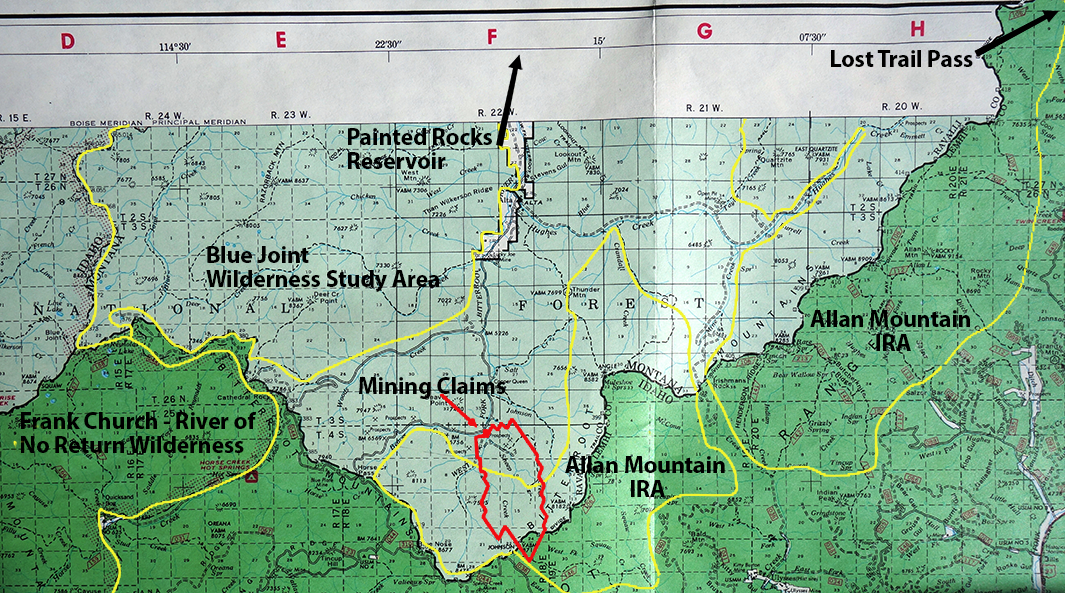
The Sheep Creek REE claim block spans a wildlife linkage corridor along the MT/ID divide connecting the Continental Divide corridor with the River Of No Return and Selway Bitterroot Wilderness right at a bottleneck in the Allan Mountain Inventoried Roadless area. The corridor is essentially Broadway for grizzly bears heading into the US Fish and Wildlife Service designated Bitterroot Grizzly Bear Recovery Area. Many other iconic species reside in or move through the Allan Mountain IRA, including wolverine, rocky mountain sheep, mountain goats, and Northern Rockies fisher.
The USFWS grizzly bear recovery plan depends on grizzly bears wandering into the Bitterroot Recovery Area. The connectivity corridor at stake is the only existing wildland corridor through the highly populated Bitterroot Valley.
Threat to water and native trout
Water contamination by ammonium leaching agents could contribute to nutrient (Nitrogen and Phosphorous) pollution of the Bitterroot River, which supports threatened bull trout, westslope cutthroat trout as well as a very lucrative fishing industry. Nutrient pollution can lead to excessive algae growth and eutrophication.
Painted Rocks reservoir, a few miles below the mine site, provides reserved instream flow to the West Fork during late-season low flows. This supports irrigation and helps make the West Fork fishery a stronghold for survival by adding cold water from the reservoir to the late season warmed river water. Pollution of Painted Rocks by would be a big risk to existing locally owned, proven-sustainable, fishing industry as well as irrigated agriculture.
Sheep Creek Updates
Scroll down to see updates over time
An Ohio based magnet company has signed a non-binding MOU with US Critical Materials concerning a future Sheep Creek mine. Details HERE
House votes to streamline approval for mines like Sheep Creek
The House voted to pass H.R. 1366, The Mining Regulatory Clarity Act (MRCA) before leaving for December recess. It will be considered by the Senate after January 7, 2026. If they approve the bill as passed, it will head to President Trump. If the Senate makes changes, it will go back to the House.
Sheep Creek Mine update 2025
Many people are wondering what is going on with the proposed Sheep Creek rare earth mine at the head of the Bitterroot River. US Critical Materials, the private company that owns the claims, has been like a ghost hovering silently but menacingly over us for several years. Despite their stated intentions to open a local office and hold public meetings to keep us informed, they have failed to deliver. Repeated deception in press releases and articles seems to be part of their brand.
Failure to follow up is good news when it comes to their false starts announcing impending exploration drilling. So far they have not done any exploration activities, like drilling, trenching or road building that involve significant ground disturbance, and they do not have the permits required to do any.
In spite of that USCM has inexplicably announced a deal with the Idaho National Laboratory, a federal energy lab, to build a pilot plant that would process one to two tons of Sheep Creek ore per day. See: https://uscriticalmaterials.com/us-critical-materials-and-idaho-national-laboratory-collaborate-to-strengthen-u-s-national-security-with-next-generation-rare-earth-critical-minerals-processing-plant/
How they expect to get that amount of ore is a concern, given they do not have an Exploration Plan of Operation, let alone any permit to mine. What they do have is a 2025 NOI (Notice of Intent) permit which only allows for operations that will not likely cause significant resource disturbances. See: https://www.fs.usda.gov/r01/bitterroot/newsroom/releases/notice-intent-conduct-mineral-exploration-1
Presently USCM makes baseless claims like: “We have confirmed that Sheep Creek is the highest-grade rare earth deposit in the United States, with a multibillion-dollar resource value,” https://uscriticalmaterials.com/high-grade-gallium-rare-earths-verified/ when in fact they actually know almost nothing about the amount of ore (resource value) at the Sheep Creek claims. USCM would have to drill to know about the size of the resource. High grades are not enough to make a REE mine profitable, just as a gold nugget does not make for a gold mine. They need sufficient volume of ore to make a mine.
Elsewhere, out of the other side of their mouth, they momentarily get honest: “No assurance can be given that any particular level of recovery of minerals will be realized or that an identified resource will ever qualify as a commercially mineable or viable deposit which can be legally and economically exploited.” https://uscriticalmaterials.com/high-grade-gallium-rare-earths-verified/
Permits to do the necessary drilling and associated road building to access drill sites would need to be obtained from the Bitterroot National Forest as well as Montana DEQ. Over the years the USFS has developed shortcuts (called CE’s) in permitting by allowing sketchy analysis of potential environmental impacts and shortened time allowed to the public to weigh in on the taking of public resources. https://www.ecfr.gov/current/title-36/chapter-II/part-220/section-220.6 Now, with the stroke of a sharpie, President Trump has released an Executive Order that can be used to expedite permitting even further. https://www.whitehouse.gov/presidential-actions/2025/03/immediate-measures-to-increase-american-mineral-production/
Given the potentially very short time the public may be allowed to comment on the proposed Sheep Creek mine we knew we had to get out ahead of the official public process so we created a document we call “pre-scoping comments” and recruited support from 17 groups to serve as a framework for more refined comments once we know specifics regarding any proposed Exploration PoO released to the public for comments.
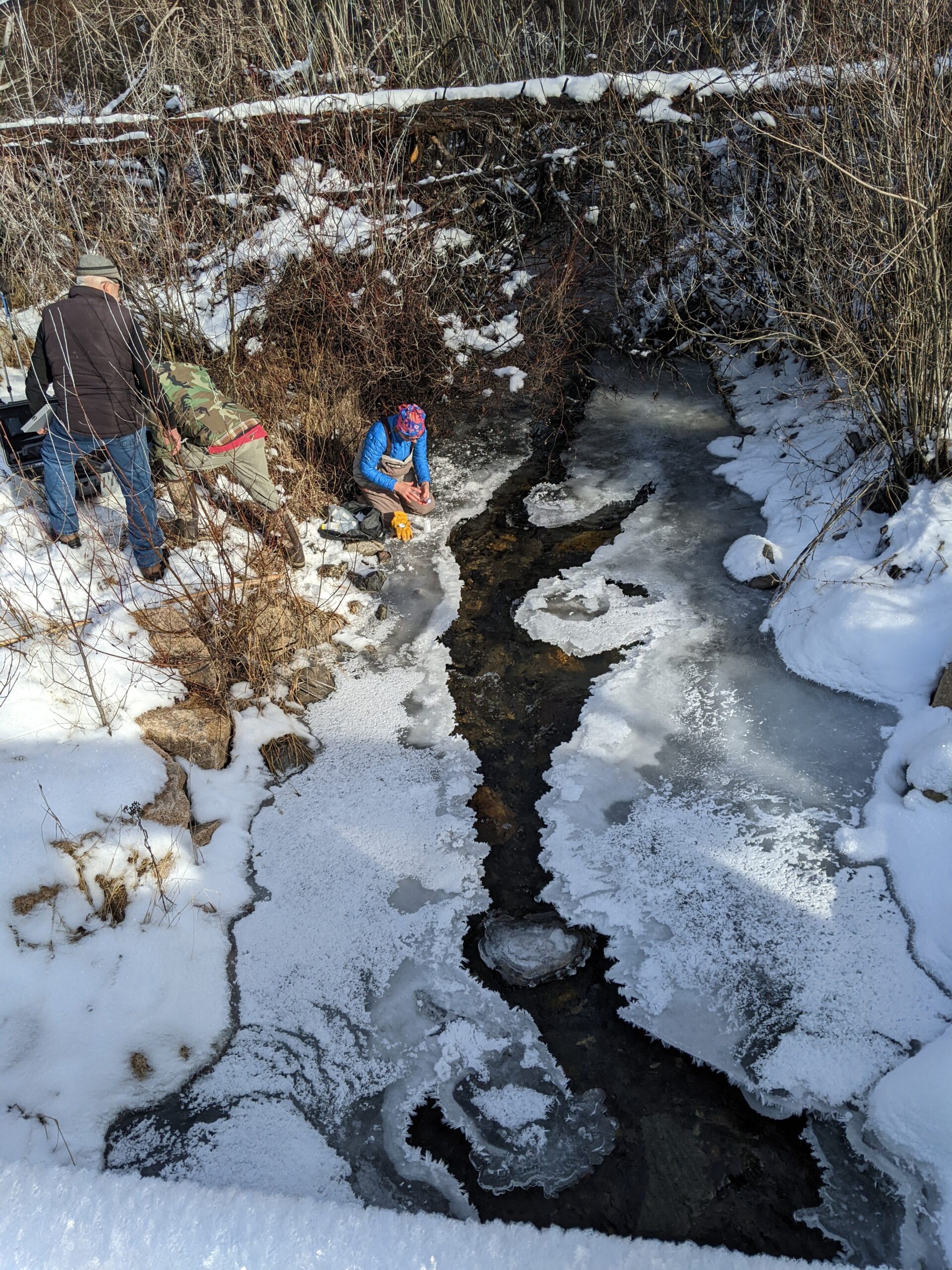
While awaiting the official start of public involvement by permitting agencies we are continuing to volunteer with a “citizen science” project, supported by several non-profit groups, to establish baseline data on water quality conditions that could be jeopardized once ground disturbing activities begin at the mine site. So far, after two rounds of expensive testing, partially funded by a Cinnabar Foundation grant, we have documented that the three streams presently being tested are pristine, as one would expect in this wildlands headwaters area.
One vital issue we want to highlight is the question about presence, or not, of asbestos at the mine site. This potential human health issue needs to be addressed before any “ground disturbing” activities take place. Permitting agencies, USFS and MTDEQ, should require USCM to pay for independent testing for asbestos at the Sheep Creek mine site. It is well documented that a significant amount of the mineral actinolite is associated with the REE minerals USCM is targeting. Actinolite can be asbestiform and even more toxic than the more usual type of asbestos. There is good reason to be concerned. In 1960 it was reported that Sheep Creek actinolite “forms masses of radiating fibers surrounding other crystals”. Tremolite, closely related to actinolite, has killed hundreds of people in and around a vermiculite mine in Libby, Montana. Dust containing asbestos can travel far and wide and is very difficult to ever clean up. Prevention is the only solution. Drilling exploration is dusty business. See: https://missoulacurrent.com/viewpoint-mine-asbestos/ For more information about asbestos at Sheep Creek see the Asbestos report by Larry Campbell
See previous updates HERE
Working to stop the mine
Friends of the Bitterroot is working with many other groups to follow the permitting process and stop the mine.
1/2026
21 groups including Friends of the Bitterroot respond to the proposed plan of operation for the Sheep Creek Mine.
See the letter HERE
See the article in the Daily Montanan HERE
11/2025
Plan of operations submitted
See the draft plan of operations HERE or visit the Bitterroot National Forest Sheep Creek Project page
Read the story on the plan of operations release in the Missoula Current HERE
Read the story on details in the draft plan of operations in the Bitterroot Star HERE
10/2025
Friends of the Bitterroot submitted a Freedom of Information request concerning the Sheep Creek Mine on 10/20/2025. FOB finally received a response on 2/4/2026. Not much information was included, just one inspection that approved all work, and many public comments. Thank you so much for writing to the Forest Service concerning the mine. It has made a difference.
Click HERE to see the FOIA materials..
12/2025
Ravalli County Residents attend the Commissioners meeting on Sheep Creek.
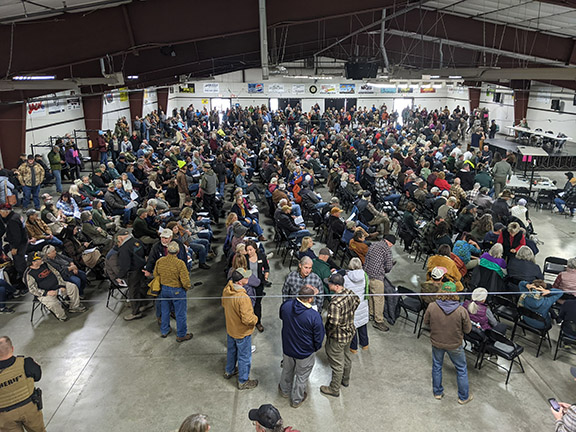
Over 500 folks in Ravalli County attended the Commissioners meeting on the Sheep Creek Mine. All spoke in opposition to the mine. See articles below. Thanks to everyone who attended. Working together to protect the Bitterroot.
Ravalli County Commissioners pen letter to Representative Zinke.
12/2025
FOB member and retired exploration geologist writes a letter to editor concerning the proposed plan for the Sheep Creek Mine
2024-2025
While awaiting the official start of public involvement by permitting agencies we are continuing to volunteer with a “citizen science” project, supported by several non-profit groups, to establish baseline data on water quality conditions that could be jeopardized once ground disturbing activities begin at the mine site. So far, after two rounds of expensive testing, partially funded by a Cinnabar Foundation grant, we have documented that the three streams presently being tested are pristine, as one would expect in this wildlands headwaters area.
5/2024
Sheep Creek drilling delayed because US Critical Materials found the project to be "high profile." That is thanks to you for writing to Ranger Pliley and signing the petition at Change.org.
2/2024
Friends of the Bitterroot and 18 other groups send a letter to the Forest Service concerning the Sheep Creek mine. They demand robust analysis, transparency, and public involvement, citing a long overdue Freedom of Information Act request for information concerning the mine.
See the Press Release HERE and the story in The Daily Montanan
The Permitting Process
How it all works
- Mining Company stakes claims
- Mining Company files a Notice of Intent (NOI) for exploration activities, no ground disturbance permitted.
- Mining Company submits a draft Plan of Operation (PoO) for exploration.
- The initial Plan of Operation will outline exploration drilling and plans in the area. Please note that exploration drilling can be very destructive. Unless they opt for helicopter drilling, it could include the construction of roads in the Allan Mountain Inventoried Roadless Area near the Frank Church River of No Return Wilderness.
- The Forest Service makes suggestions for changes to draft PoO.
- Mining Company submits a final PoO.
- The Forest Service connects with agencies and tribal entities for necessary permits.
- The Forest Service publishes Draft Environmental Assessment (EA) and opens a public comment period.
- The public submits comments on the Draft EA.
- The Forest Service issues a Draft Decision.
- The public has a chance to submit an objection to the Draft Decision.
- If there are objectors, an objection meeting takes place.
- The Forest Service considers objections.
- The Forest Service issues a final Decision.
Permits needed and various regulations
- The need for mining law reform Department of Interior discussion on Reforming the mining law of 1872
- Good overview of mining law
- FS Handbook re: Categorical Exclusions (CE) see p.12
- Montana DEQ mineral exploration license
- CEQ on protecting biological corridors, "“This guidance encourages Federal agencies to promote greater connectivity across terrestrial, marine, and freshwater habitats, as well as across airspaces, to sustain biodiversity and to enable wildlife to adapt to fluctuating environmental conditions, including those caused by climate change.”
- Montana rock product permit flow chart
- 404 permit from Army Corps if they alter wetlands or impact WOTUS
- NPDES permit for discharges from DEQ
- Air quality permit for mining operations
- Fixing America's Surface Transportation Act
- 3/8/23 CFR Regulations re: mining
Sheep Creek Process
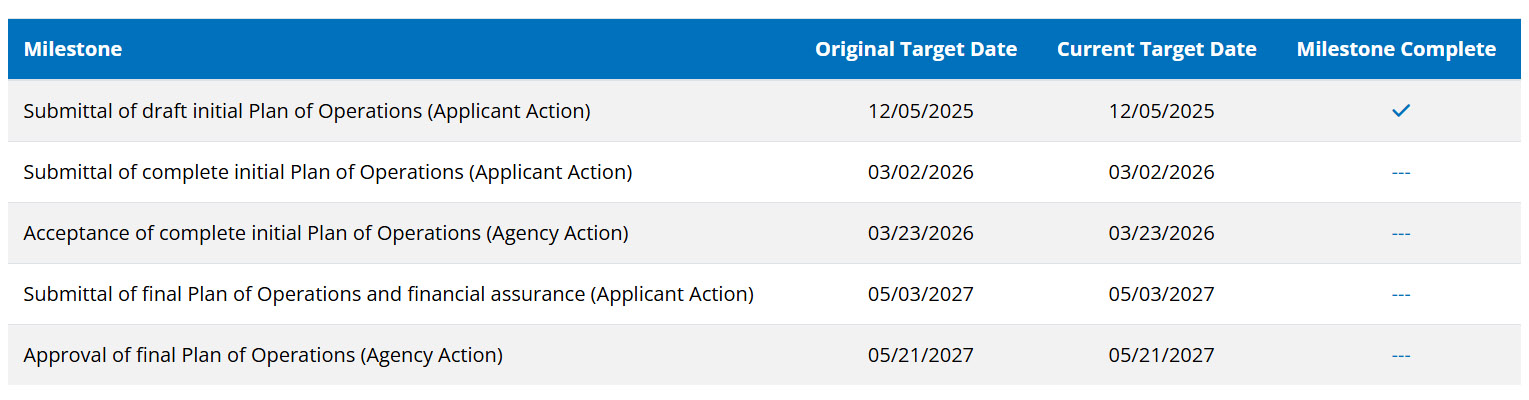
USCM seems to be stalling at number 5. According to the FAST 41 website, the company has not submitted a final PoO which was due on March 2.
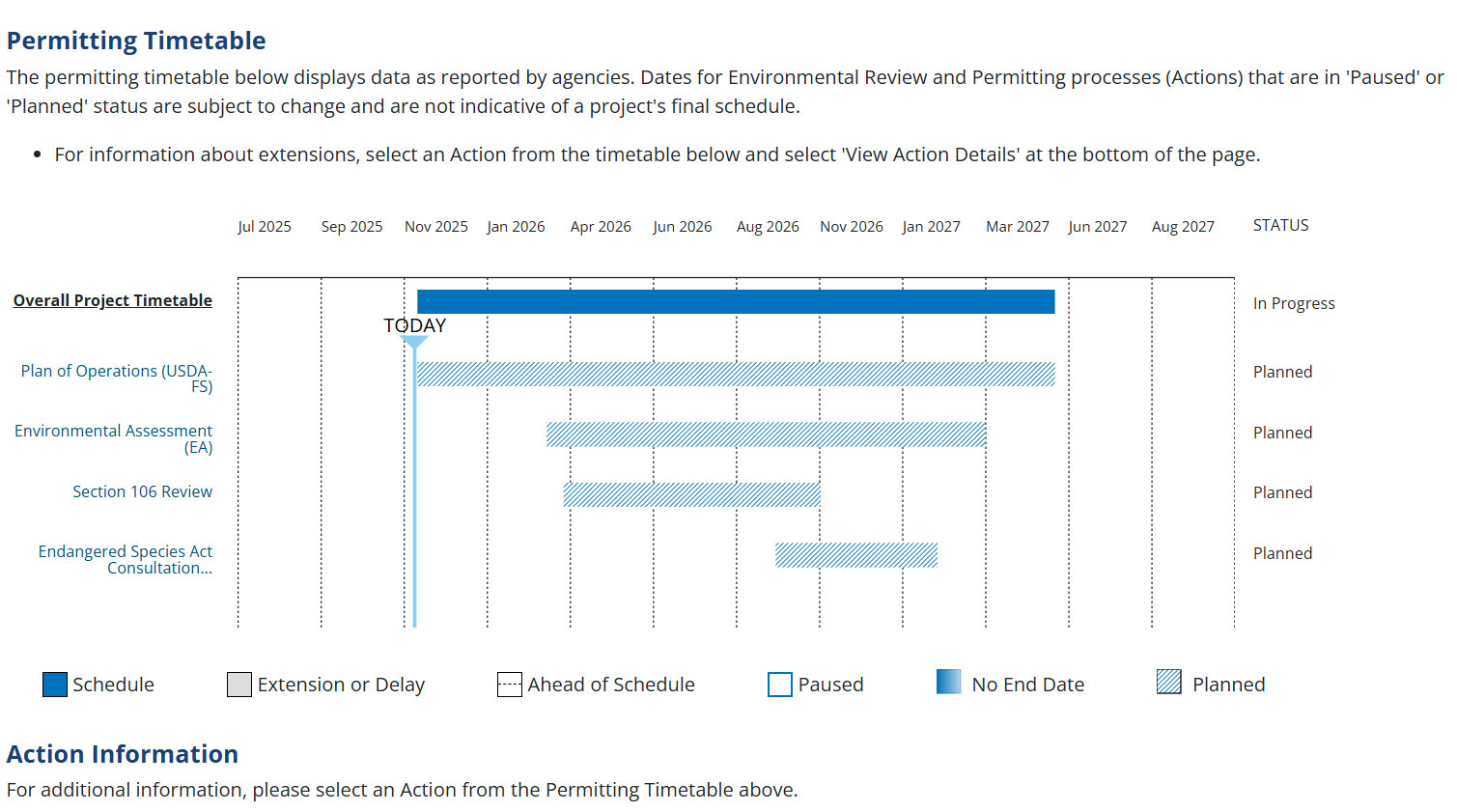
Permitting timetable (see below) has been posted on the FAST41 page.
The Companies Involved
United States Critical Materials USCM (involved in Sheep Creek)
US Critical Materials, the private company that owns the claims, has been like a ghost hovering silently but menacingly over us for several years. Despite their stated intentions to open a local office and hold public meetings to keep us informed, they have failed to deliver. Repeated deception in press releases and articles seems to be part of their brand.
USCM has announced a deal with the Idaho National Laboratory, a federal energy lab, to build a pilot plant that would process one to two tons of Sheep Creek ore per day. See: https://uscriticalmaterials.com/us-critical-materials-and-idaho-national-laboratory-collaborate-to-strengthen-u-s-national-security-with-next-generation-rare-earth-critical-minerals-processing-plant/
The Company: https://uscriticalmaterials.com/
On Sheep Creek: https://uscriticalmaterials.com/sheep-creek/
Integral Metals Corp IM (involved in the Woods Cross venture) is a Canadian based company.
The company: https://www.integralmetals.com/
On Woods Cross: https://www.integralmetals.com/woods-creek-property/
In the News
News specific to Sheep Creek
- Mining Company to submit new W. Bitterroot plan, Missoula Current 3/31/2026
- Exploration plan for Bitterroot rare-earth mining project to be revised, Bozeman Chronicle 3/27/2026
- Ravalli County Collaborative comes out against the Sheep Creek Mine, Bitterroot Star 3/10/2026
- Conservation Groups Call on the Forest Service to reject Sheep Creek mining plan, KPAX 1/7/2026
- Plan of Operations for Sheep Creek Mine submitted, Bitterroot Star 12/2025
- Congressional Delegation to Forest Service: Sheep Creek Mine needs transparency, engagement, The Daily Montanan, 12/10/2025
- Sheep Creek Mine Exploration in Bitterroot Draws Opposition, The Daily Montanan, 12/2/2025
- Sheep Creek Mine on the Fast Track list, 11/25/25
- Montanans show up in great numbers to oppose mine at the headwaters of famous trout river, Field and Stream, 3/11/2025
- Sheep Creek drilling plan delayed but mine sampling in the Bitterroot to continue in 2024, The Daily Montanan, 5/2/2024
- No Plan of Operation yet for Sheep Creek mine, Bitterroot Star 5/7/2024
- Mining Company out of Canada says it will continue to explore Bitterroot River Headwaters for Rare Earth Minerals Field and Stream, 5/8/2024
- Sheep Creek drilling plan delayed, but mine sampling in the Bitterroot to continue in 2024, Daily Montanan, 5/2/2024
- Sheep Creek Mine must be tested for asbestos before any ground disturbing exploration activity
- Bitterroot Headwaters is a bad place for a mine. Missoula Current 8/10/2023
- Potential mine near Sheep Creek worries Bitterroot valley residents. Montana Free Press 7/19/2023
- Rare earth mining corporation is Canadian, leaders have court history Missoulian 6/3/2023
- Companies look to increased mining of rare earth minerals Bitterroot Star, 3/22/23
- Bitterroot Forest reacts to claims regarding West Fork mine Missoula Current, 3/17/23
- Article on Sheep Creek in High Country News. High Country News, 3/162023
- Bitterroot National Forest News Release 3/15/23
- Proposed rare earth mine would sit along the headwaters of a legendary Montana Trout Stream MSN, Field and Stream, 3/13/23
- US company claims USs richest rare earth deposit in Bitterroot The Missoulian, 3/8/23
- Company aims to mine rare earth metals in the Bitterroot The Bitterroot Star, 3/8/23
Technical Information on Sheep Creek
Articles on mining rare earth minerals
- Why rare earth mining in the West is a bust High Country News, 6/16/15
- How rare earth mining has devastated China's environment Earth.org, 7/14/20
- Not so "green" technology: The complicated legacy of rare earth mining Harvard International Review, 8/12/21
- Idaho is sitting on one of the most important elements on earth The Atlantic, 1/24/22
- Deep-sea mining for rare metals will destroy ecosystems, say scientists The Guardian 3/26/23
General Information
Some History
Rare earth minerals in the area were first discovered in the 1960s (Crowley, 1960; Heinrich and Levinson, 1961), but little work has been conducted since. In 2009, a company took 9 samples and submitted a Plan of Operation to the Forest Service. The company did not pursue the process and it was never subjected to NEPA and public comment. In the summer of 2022, US Critical Metals took 41 more samples and staked claims in the area. In the same year, Montana Tech conducted a study of the mineral deposits. This academic study will continue into the summer of 2023.
New mining operations are not necessary to obtain REEs
Rare earths do not have to come from a new mine at Sheep Creek. They can also be recovered from old tailings, waste rock, coal ash, and mine-influenced water at sites already damaged (USGS critical minerals report). USGS, DOE, and EPA are studying or funding this approach because it can supplement domestic supply and, in some cases, pair extraction with cleanup of legacy waste. The technology is not impact-free, and some of it is still developing, but it makes more sense to look first at damaged sites than to industrialize the headwaters. If the goal is domestic supply, legacy waste should come before Sheep Creek.
Mining and Mineral Exploration
- Sheep Creek Mine must be tested for asbestos before any ground disturbing exploration activity
- Blank Plan of Operation Application
- Anatomy of a mine from prospect to production
- US Government expedited and subsidized mineral development Executive order addressing the threat to the domestic supply chain from reliance on critical minerals from foreign adversaries 9/30/20
- Fact-sheet: Securing a made in America supply chain for critical minerals 2/22/22
- Water usage in rare earth mining Water usage in industries of the future: Mining industry 7/2003
- Ask a geologist: How much water usage is required to mine gold
What does rare earth mining look like?
REE’s ores are generally mined by excavating open pits and then leaching the ore in adjacent heaps or vats. Sometimes they are mined using in-situ leaching by injecting leaching agents into drill holes bored into the ore. The resulting chemical soup containing REEs is then captured for further processing. Leaching agents used to saturate the mined ore commonly include ammonium sulfate and ammonium chloride, both highly soluble in water and sometimes used as fertilizers. Materials used to refine and separate REEs from resulting concentrates include a witch’s brew of toxic chemicals.
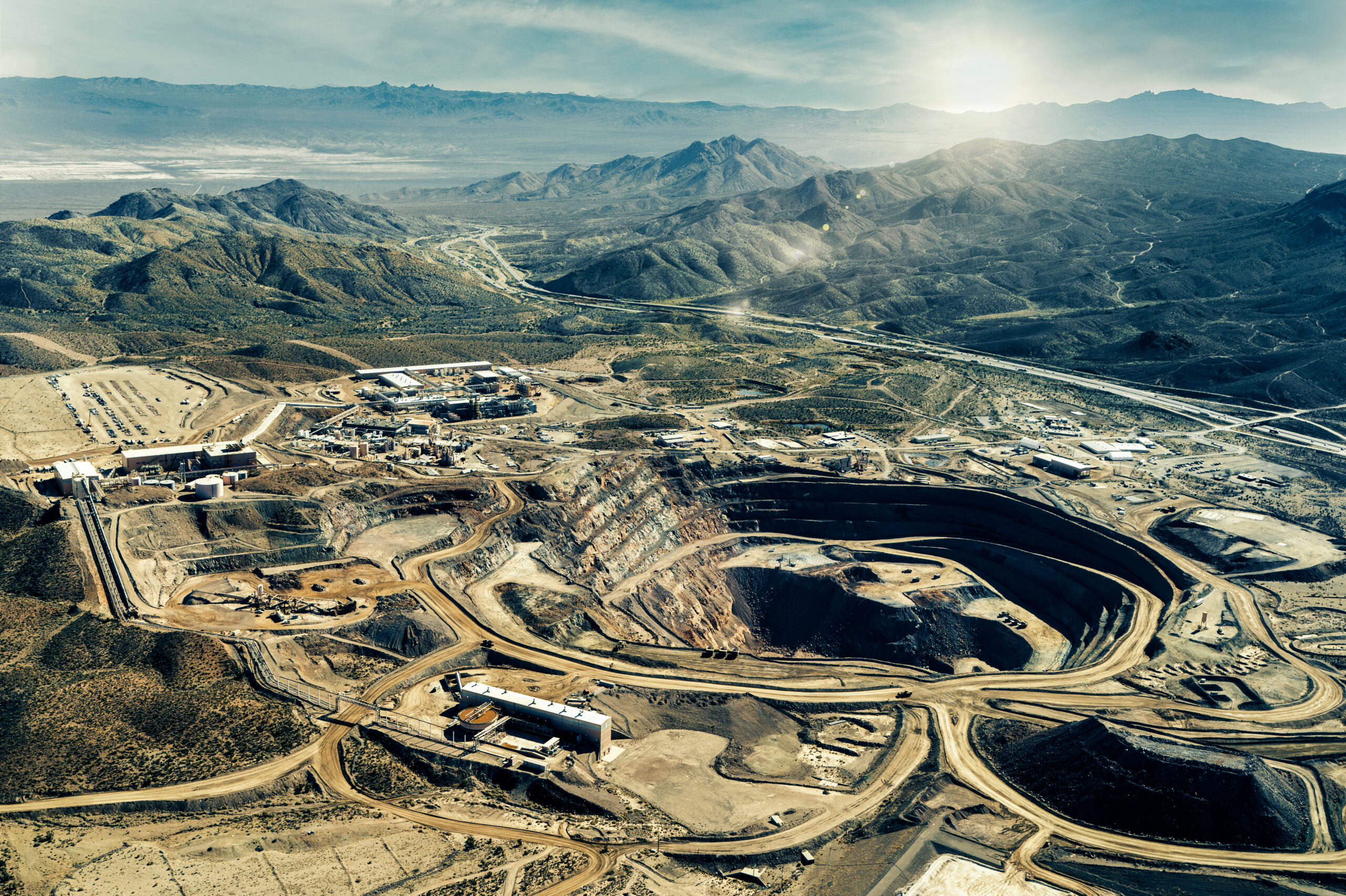
Mountain pass, California rare earth mineral ining and processing facility. Photo courtesy of Tmy 350 and Creative commons Attribution Share alike 4.0
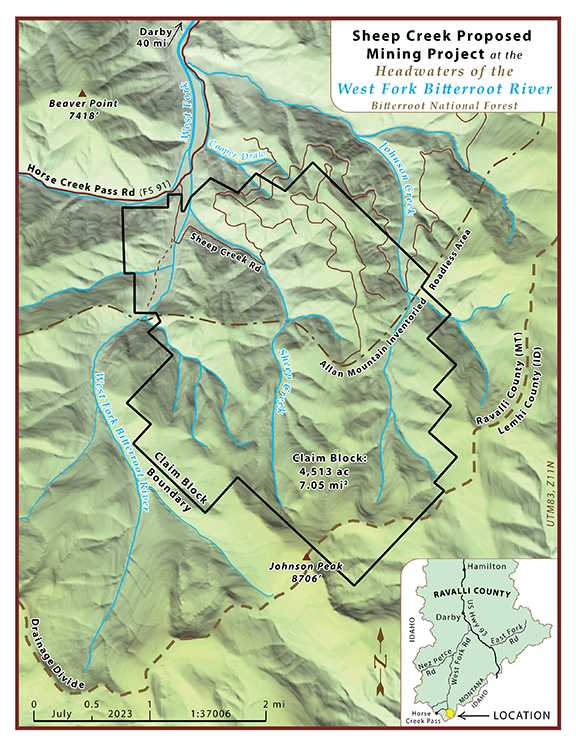
Maps and Terms
- Mining Claims and Sites on Federal Lands Brochure 2021 Glossary of terms and rules
- BNF Inventoried Roadless Area (IRA) map
- Roadless Rule
REE claim block at south end of the Bitterroot River
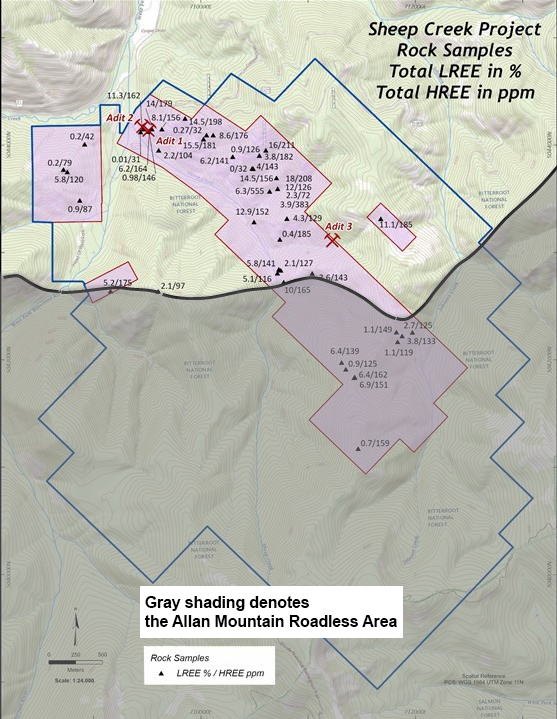
Note: Blue outlines the existing claim block. South of the black line is the Allan Mountain Inventoried Roadless Area
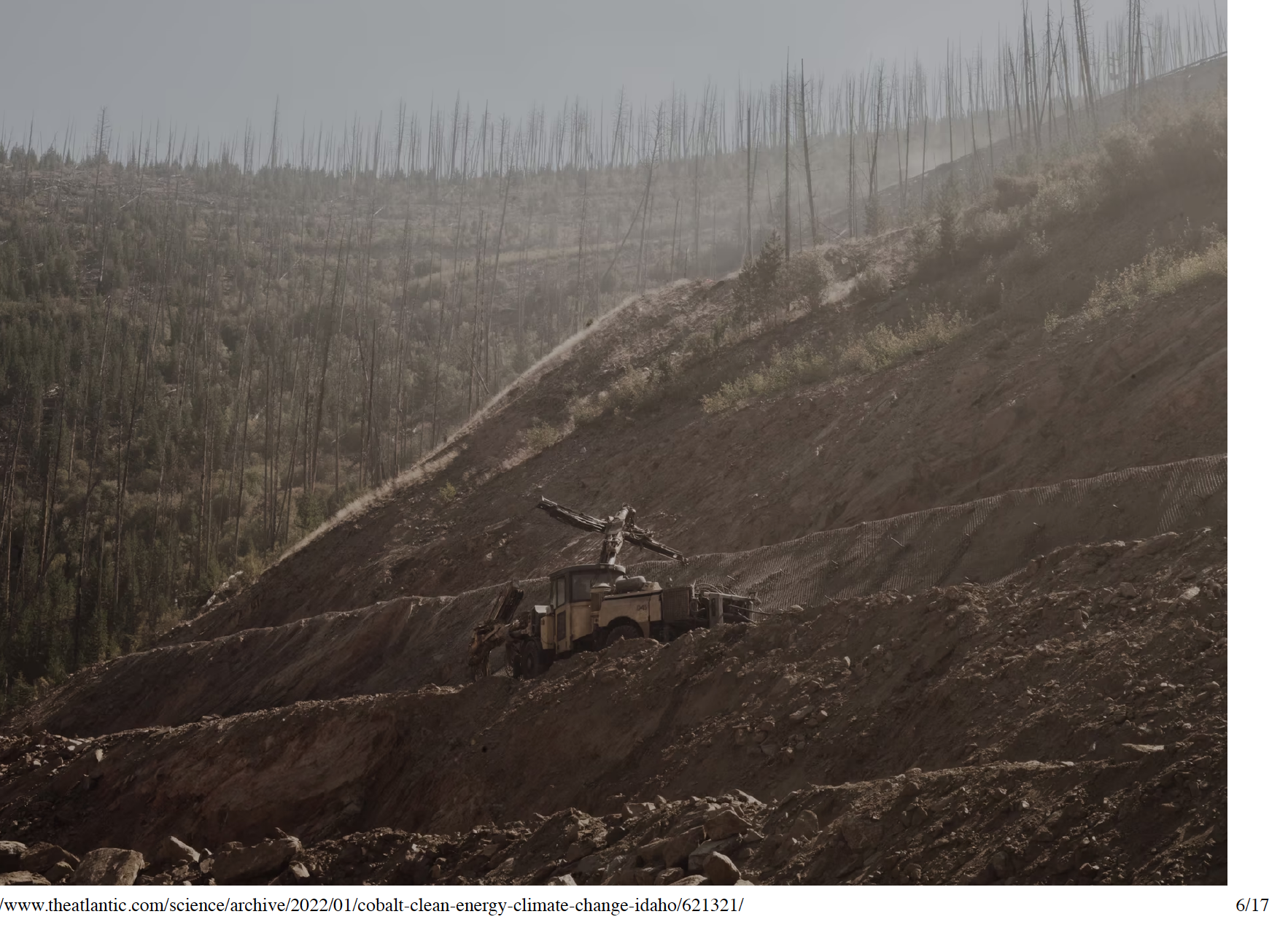
Photo of a cobalt mine in Idaho. Do we want the headwaters of the Bitterroot to look like this?
Woods Cross Updates
2025
So far all we have is the website. To our knowledge, a Notice of Intent (NOI) has not been submitted to the Forest Service.
Integral Metals Corp IM (involved in the Woods Cross venture) is a Canadian based company.
The Company: https://www.integralmetals.com/
On Woods Cross: https://www.integralmetals.com/woods-creek-property/